



Mahsa Round Rug
In stock
Original price was: £283.00.£240.00Current price is: £240.00.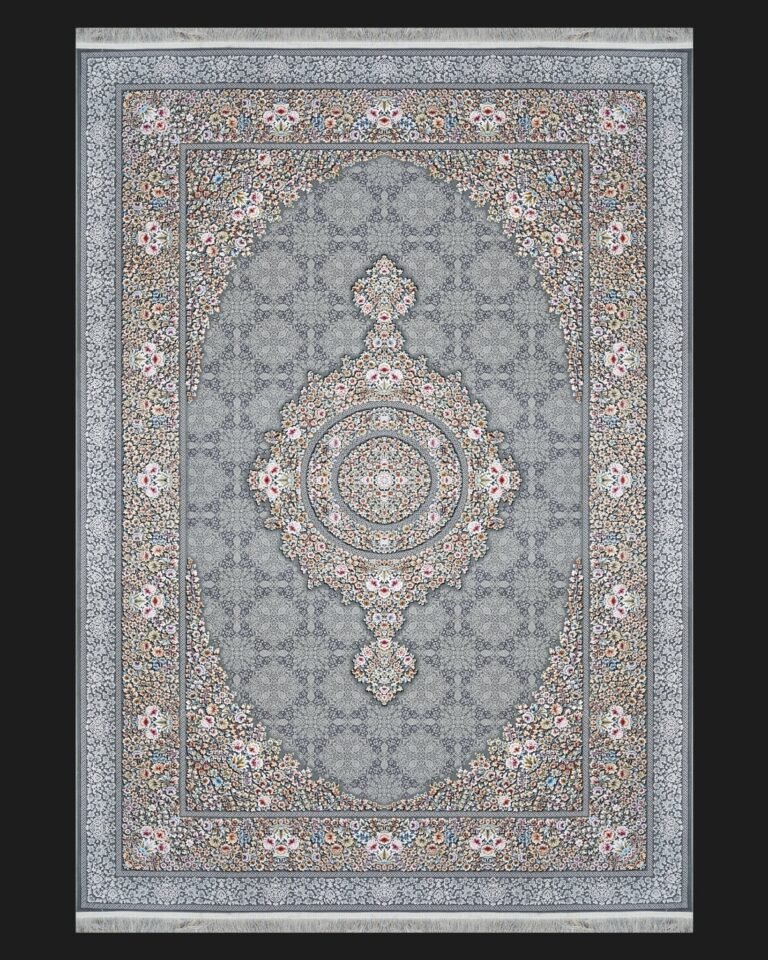
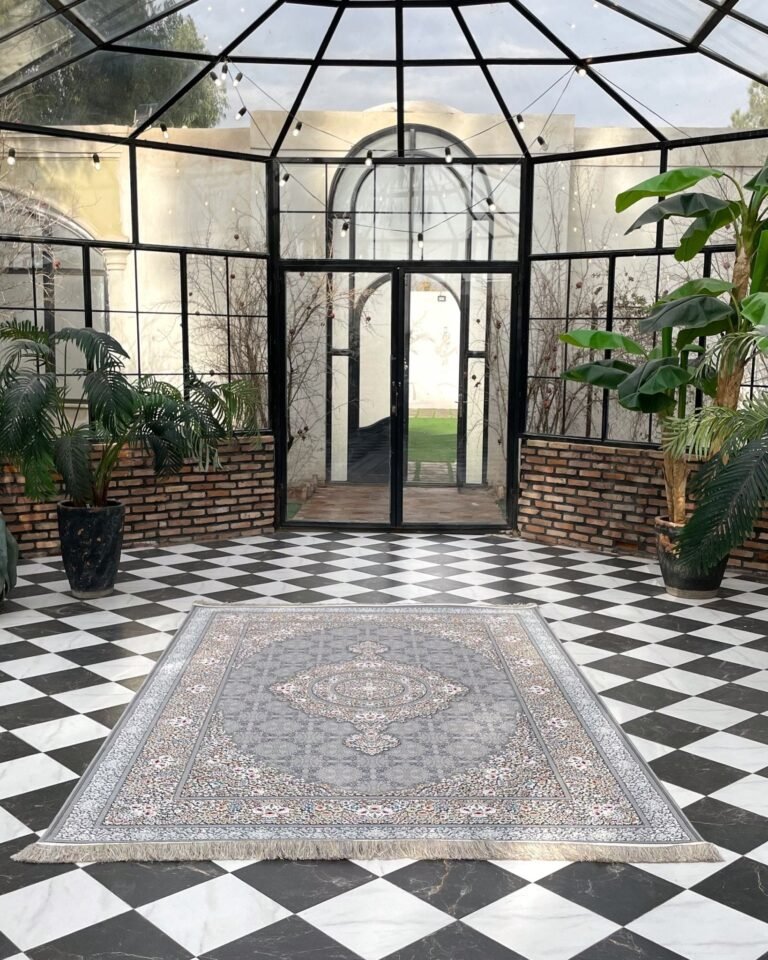
Luxe Persia Grey
In stock
Original price was: £385.00.£327.25Current price is: £327.25.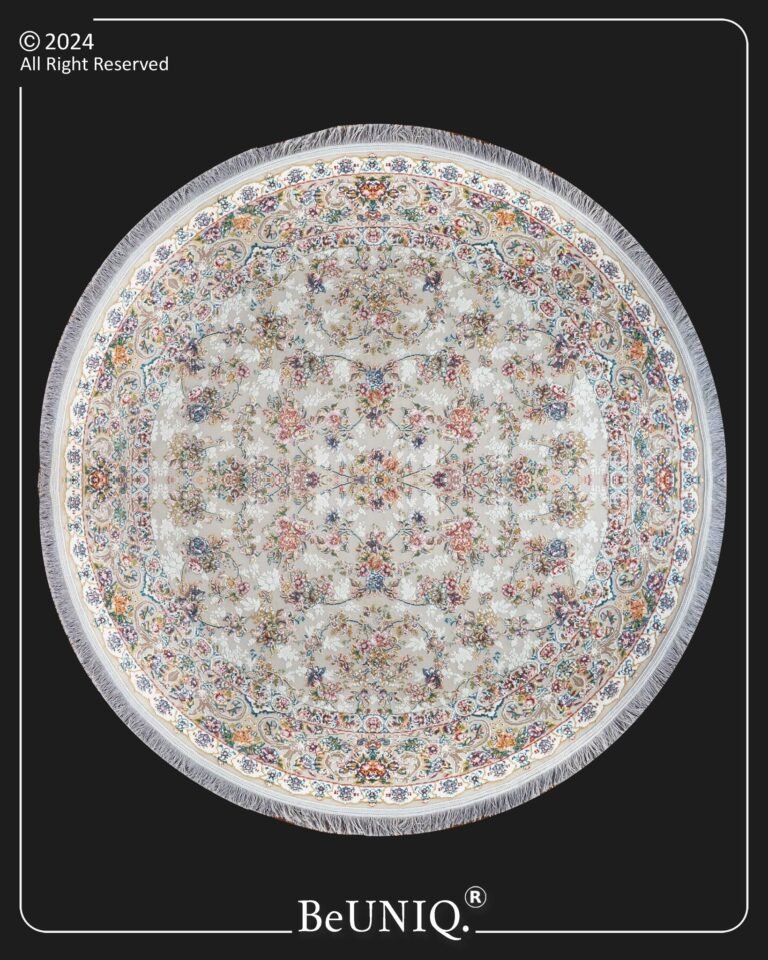
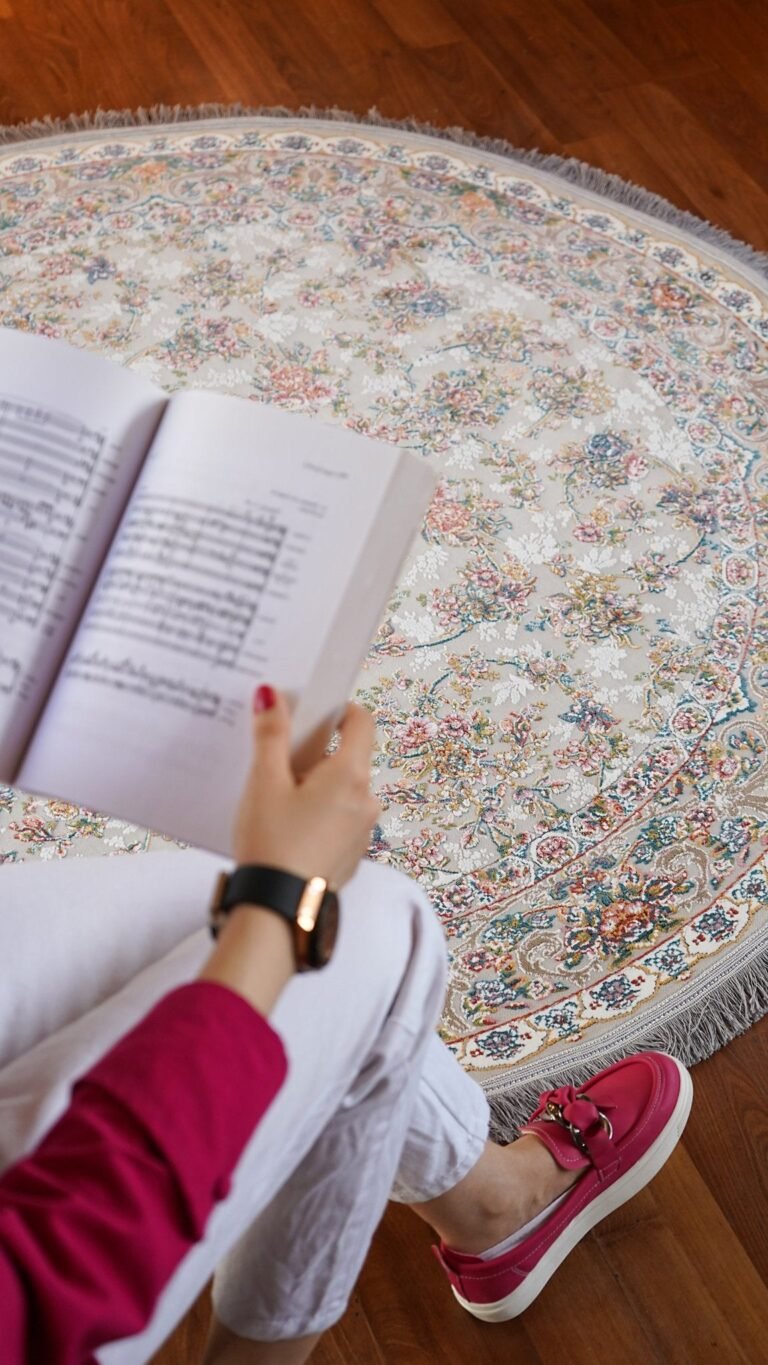
Karen Silver Round
In stock
Original price was: £245.00.£208.25Current price is: £208.25.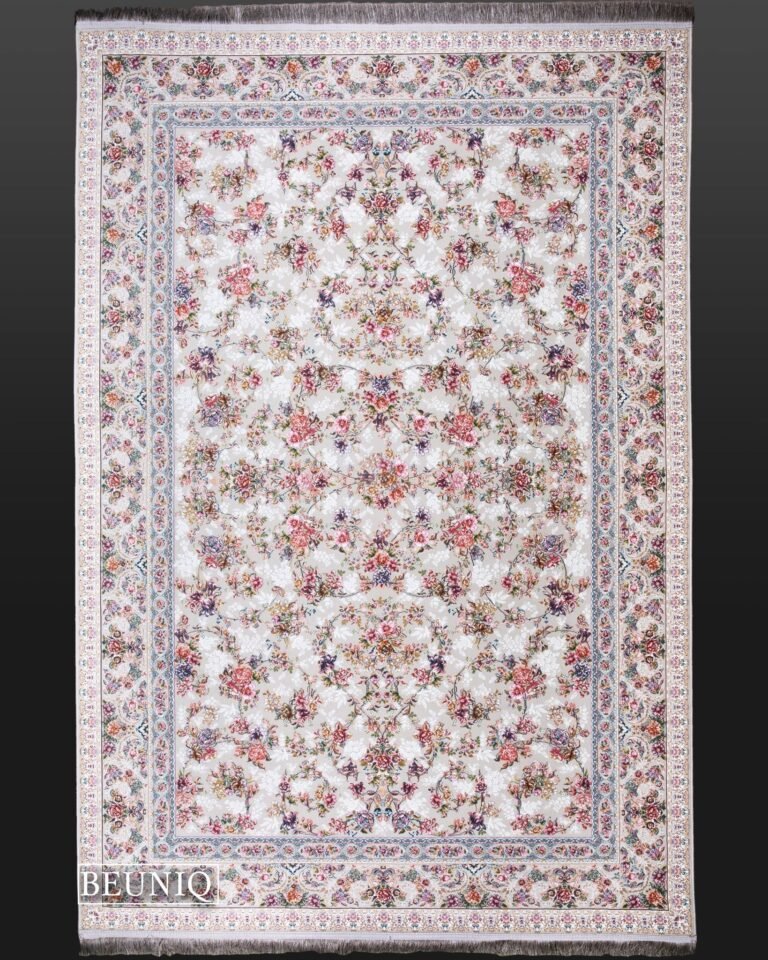
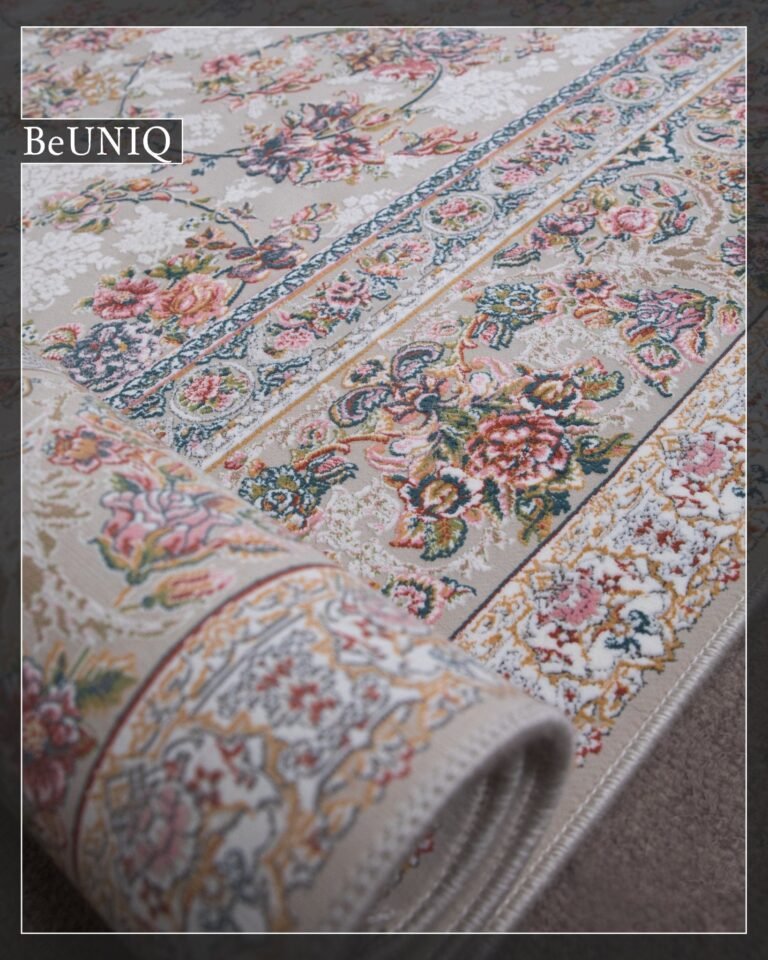
Karen
In stock
Price range: £195.00 through £370.00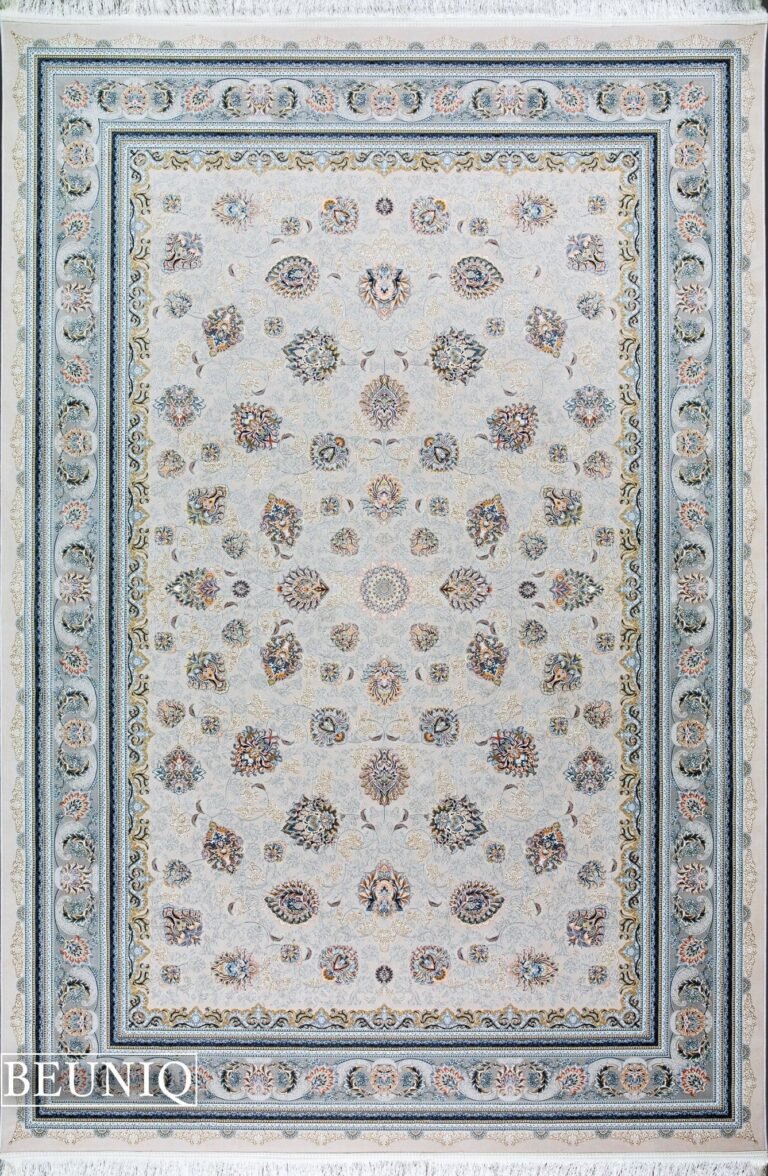
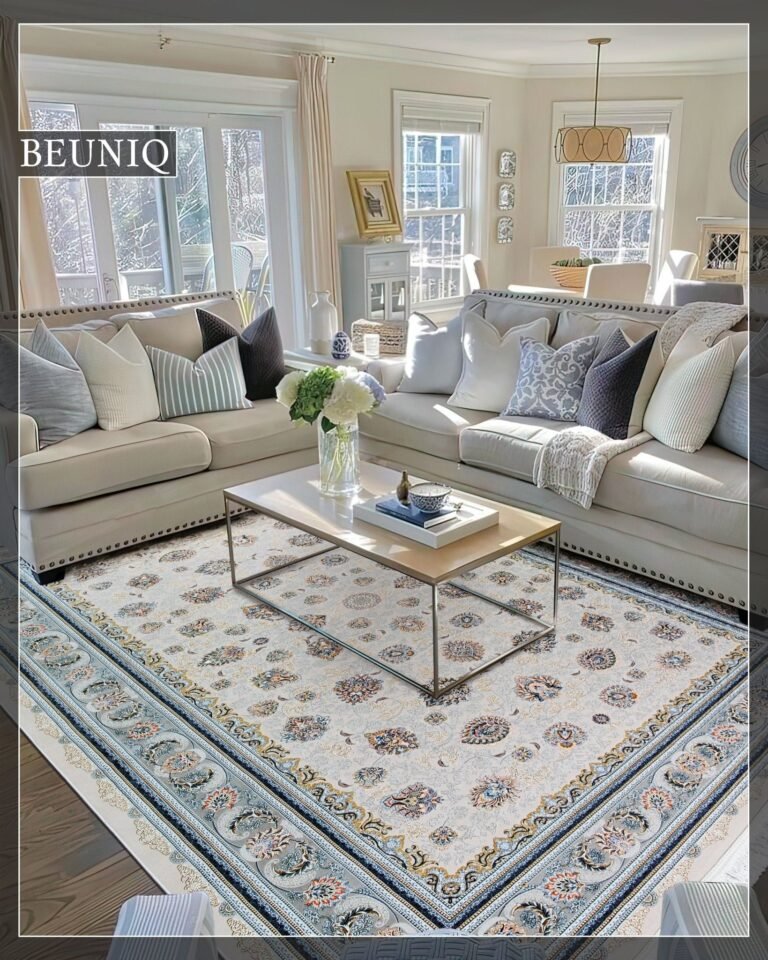
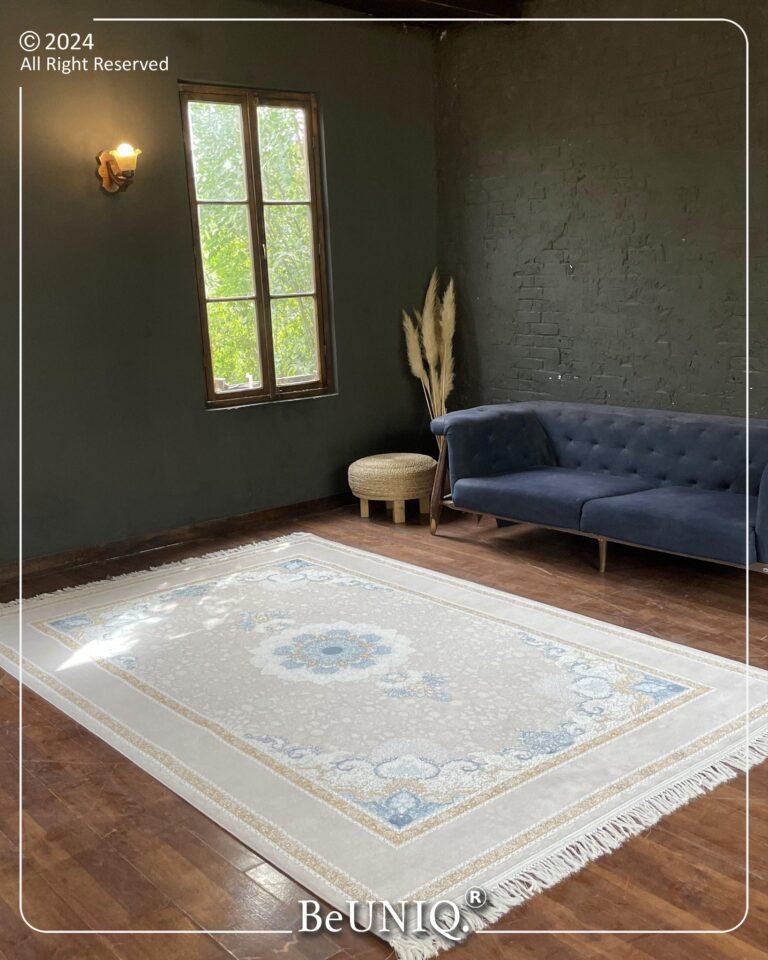
Kamelia
In stock
Original price was: £385.00.£327.25Current price is: £327.25.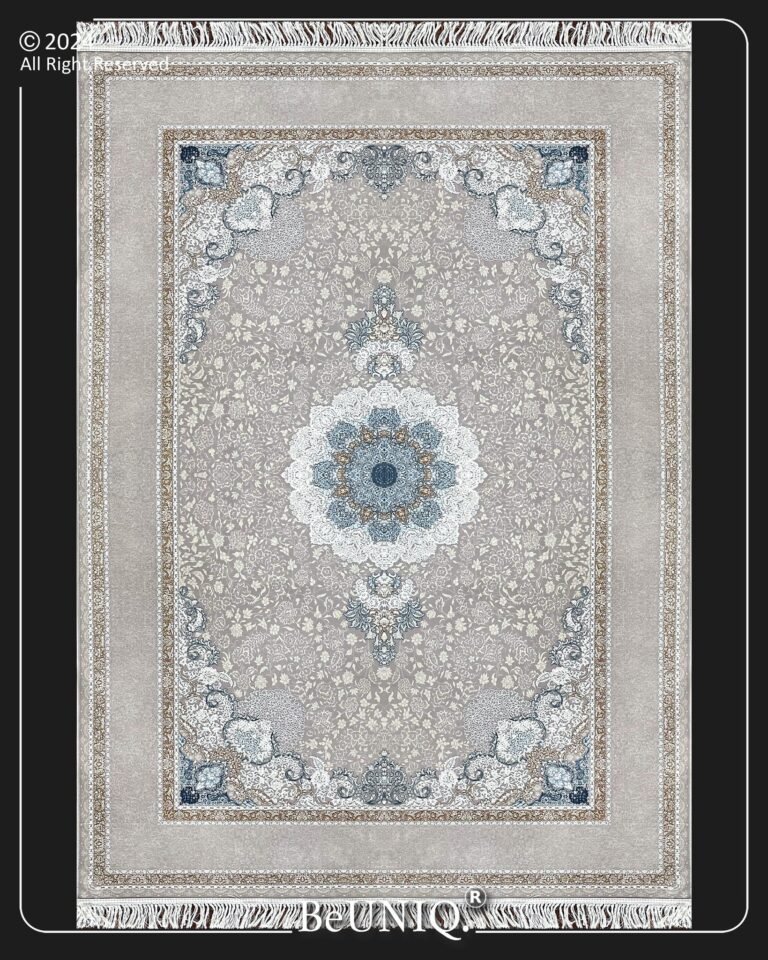
Jewel
In stock
Price range: £165.00 through £322.15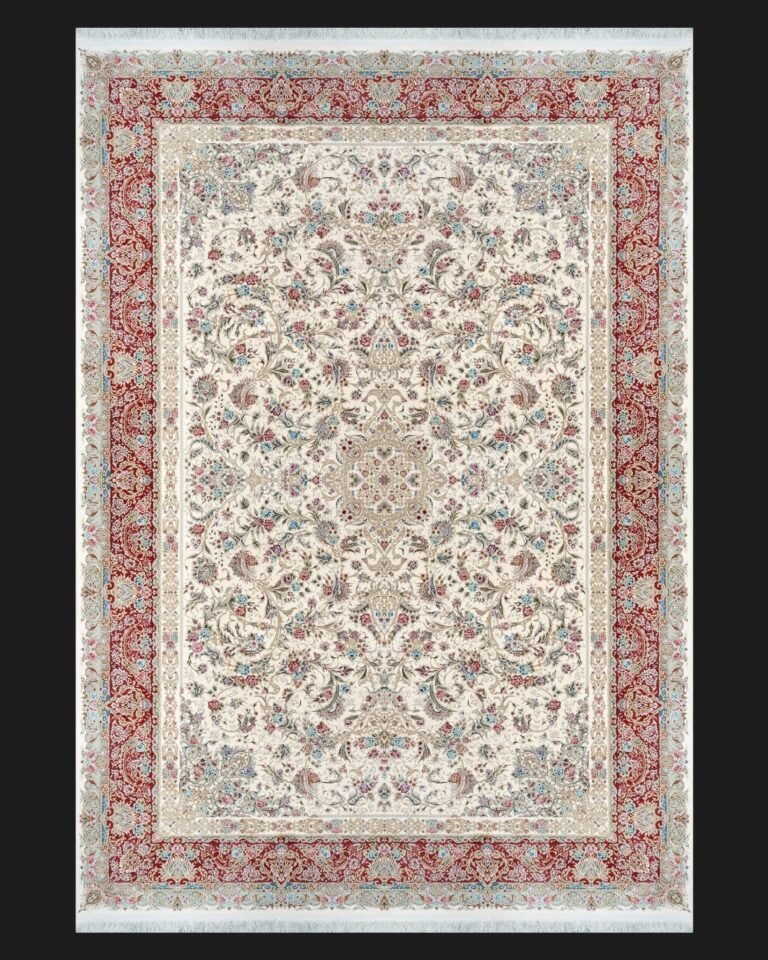
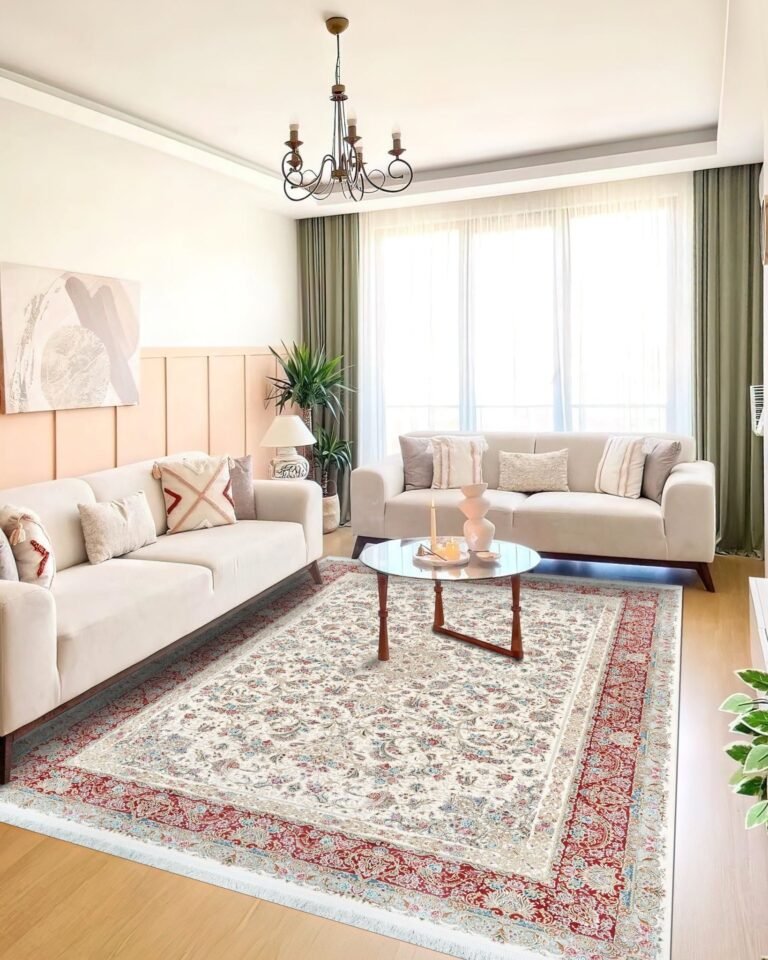
Graceful Cream – Classic Cream & Red Rug
In stock
Original price was: £385.00.£327.25Current price is: £327.25.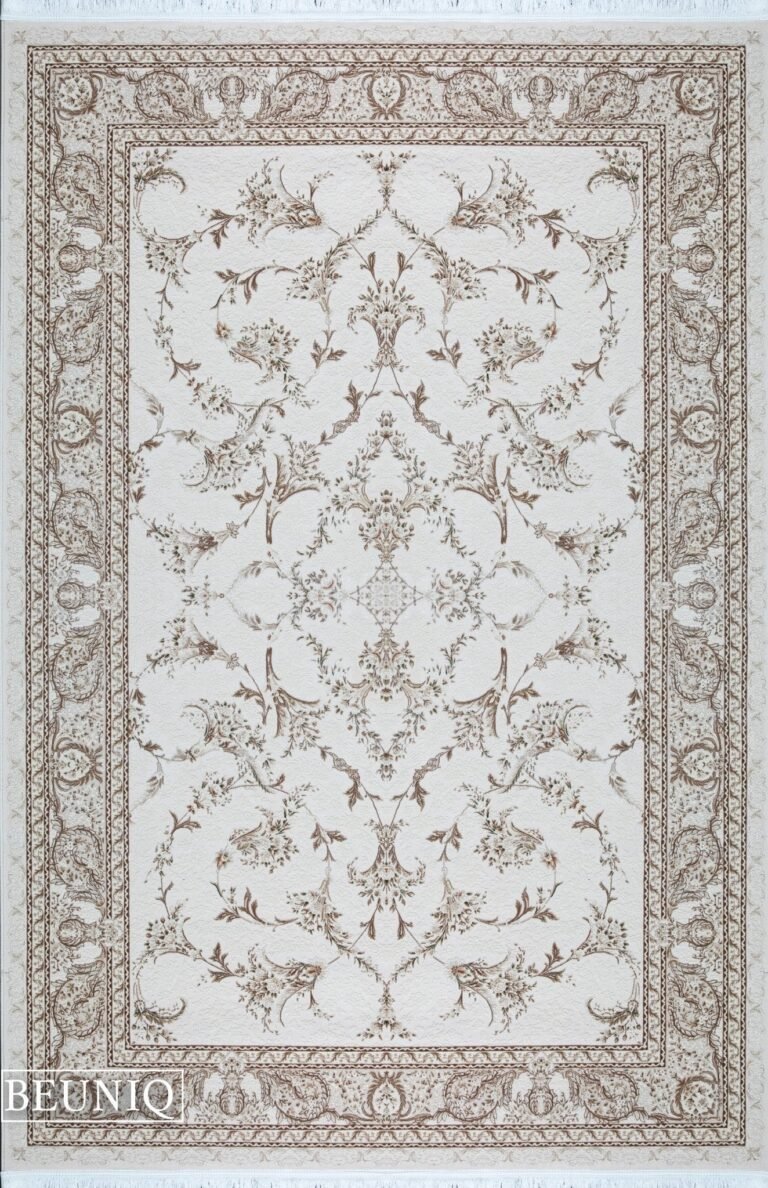
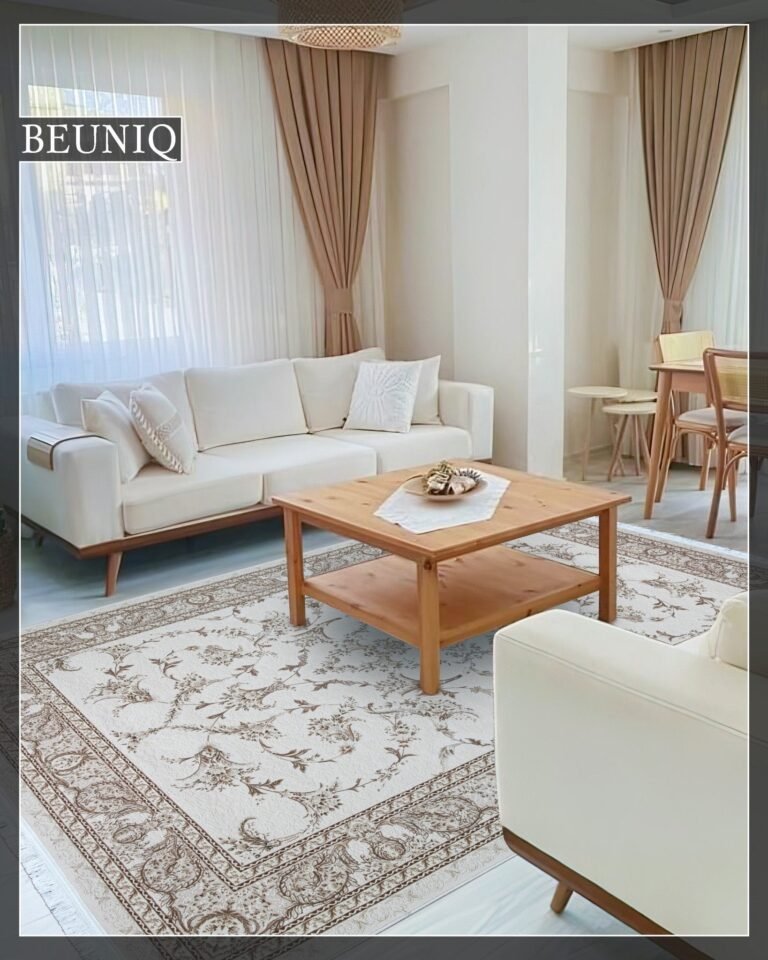
Grace 8034
In stock
Original price was: £370.00.£314.50Current price is: £314.50.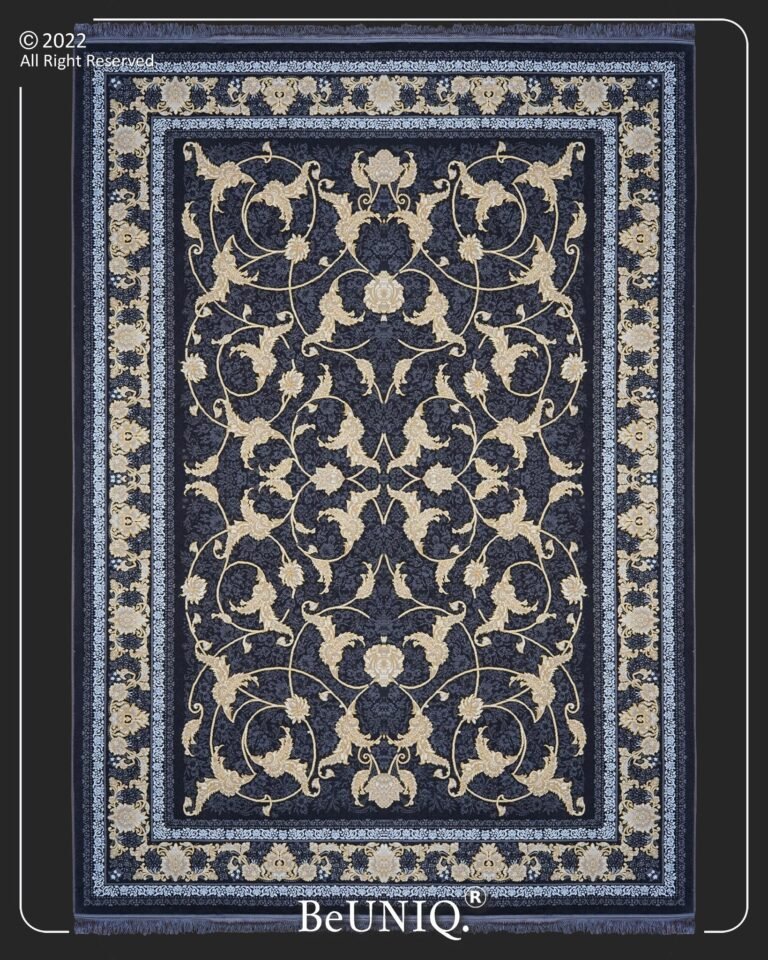
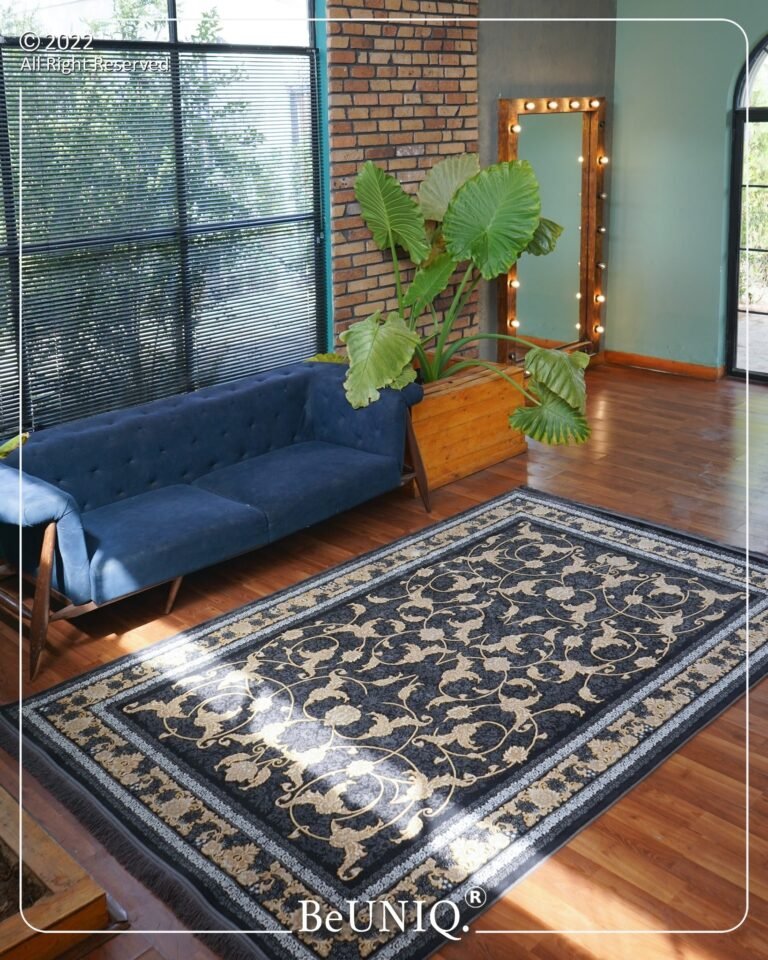
Gold Cedar
In stock
Original price was: £350.00.£262.50Current price is: £262.50.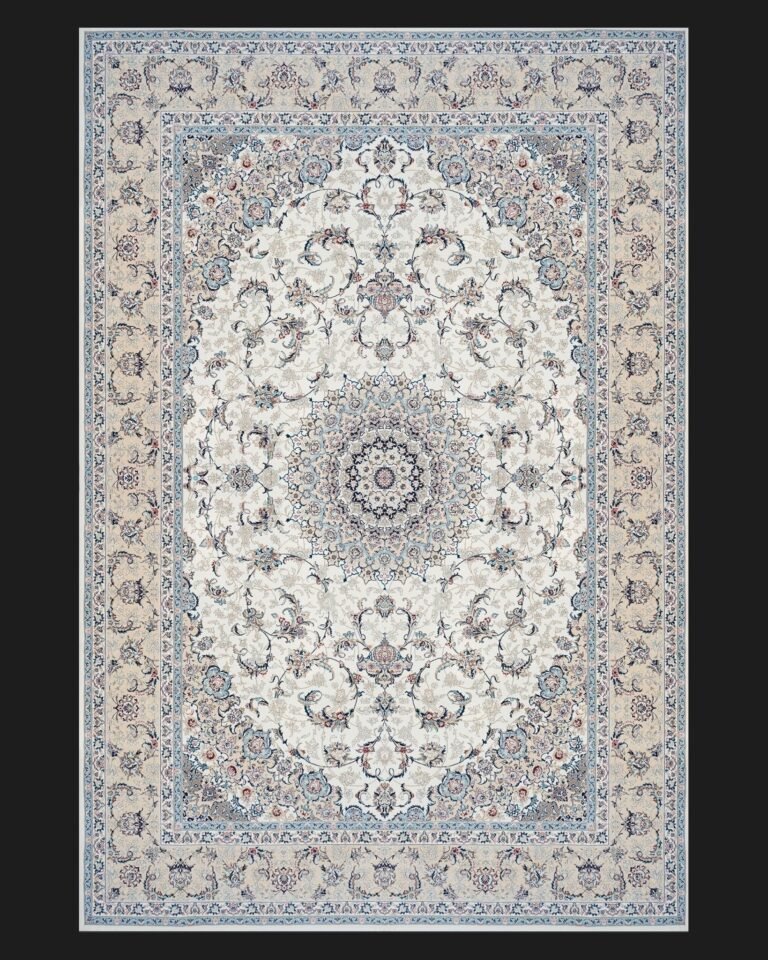
Glorious Cream Thick Rug
In stock
£585.00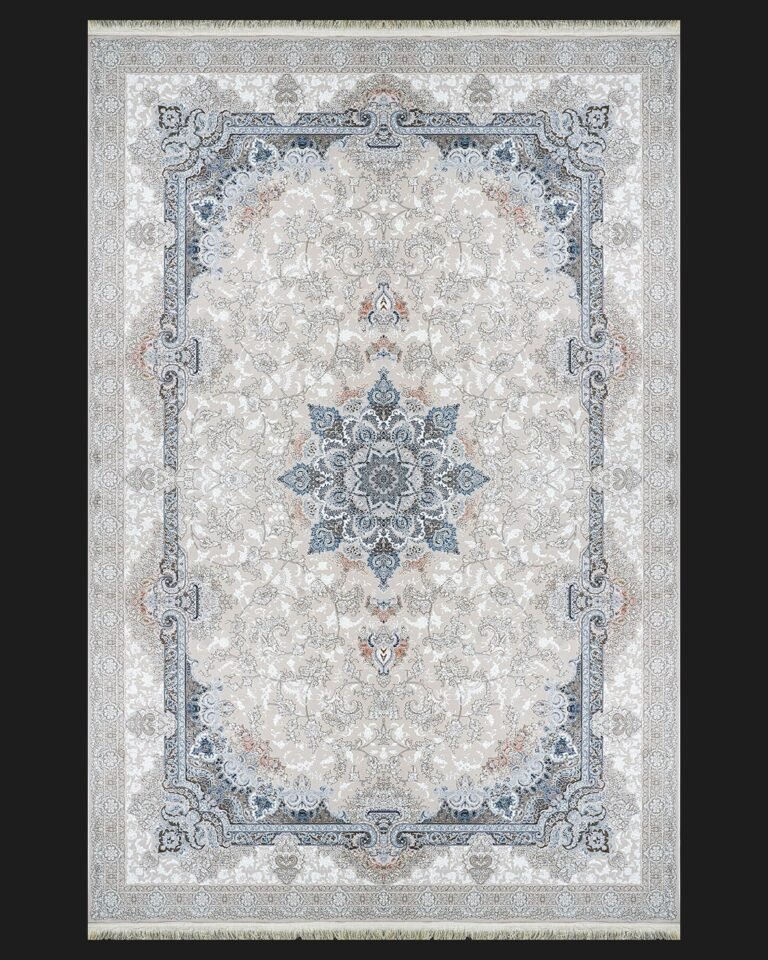
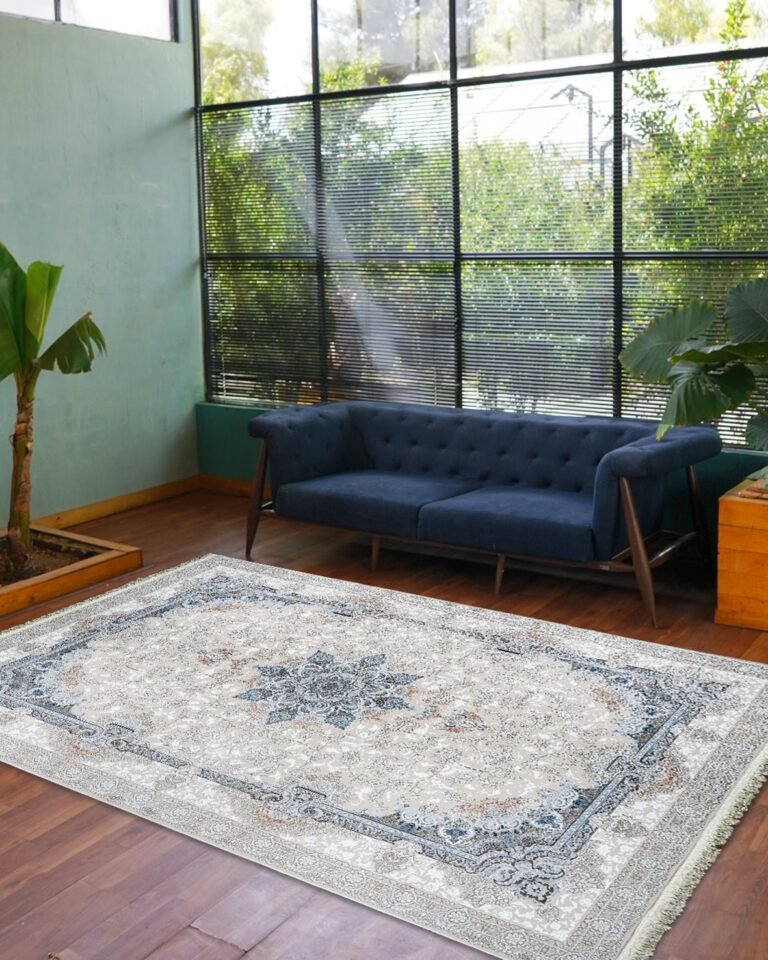
Garden 77015
Out of stock
Original price was: £365.00.£310.25Current price is: £310.25.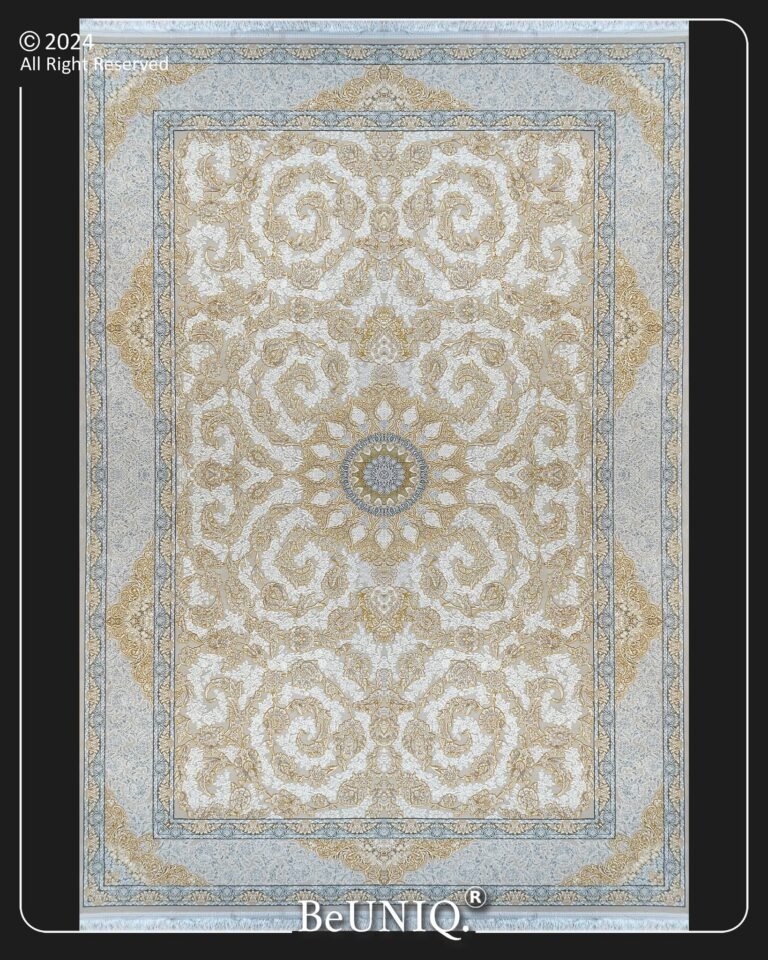
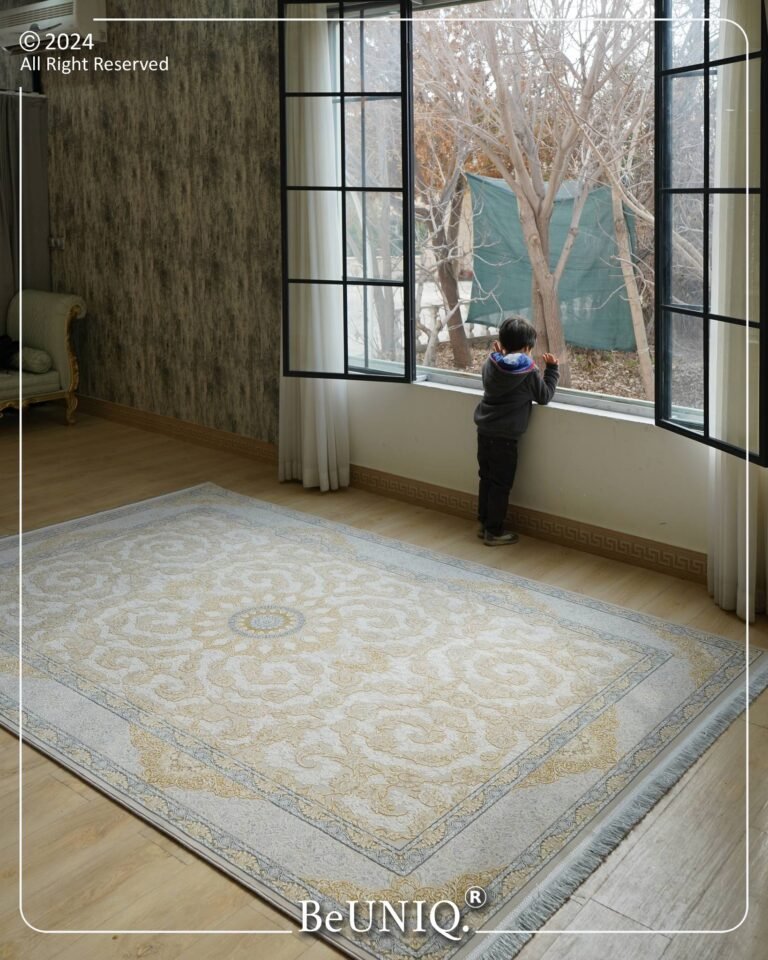
French Garden
In stock
Original price was: £370.00.£314.50Current price is: £314.50.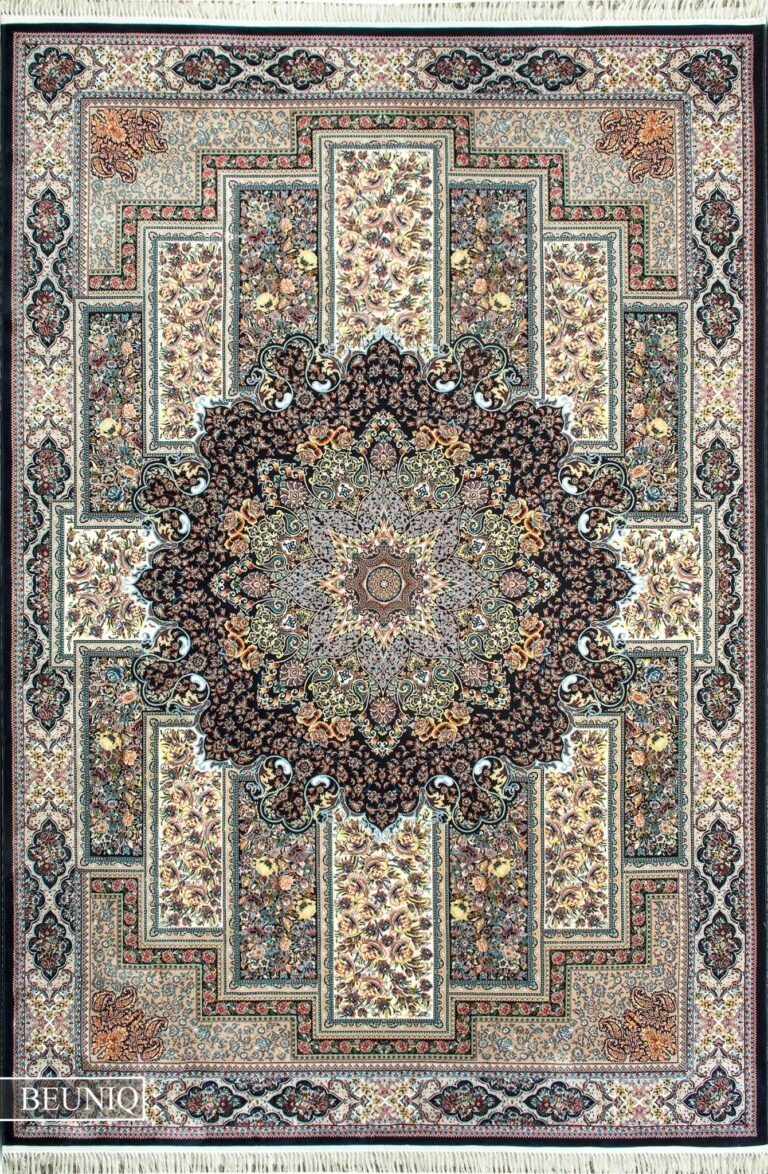
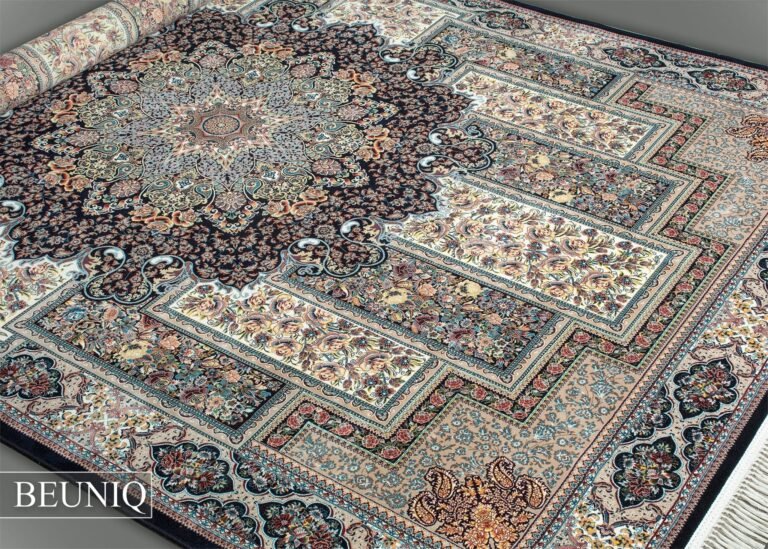
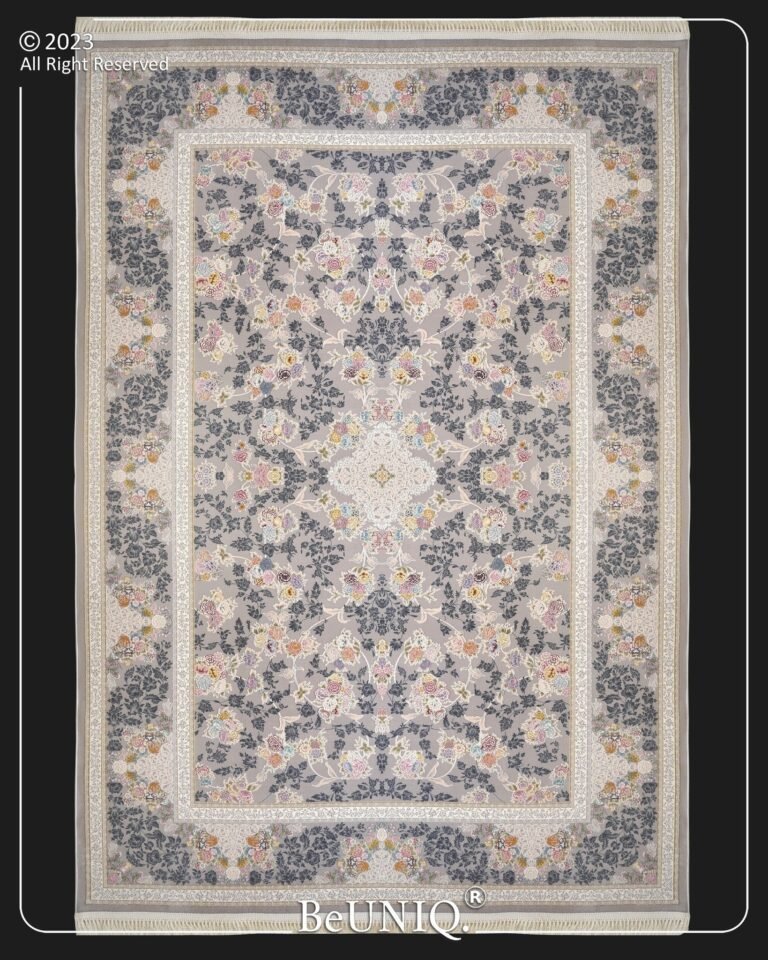
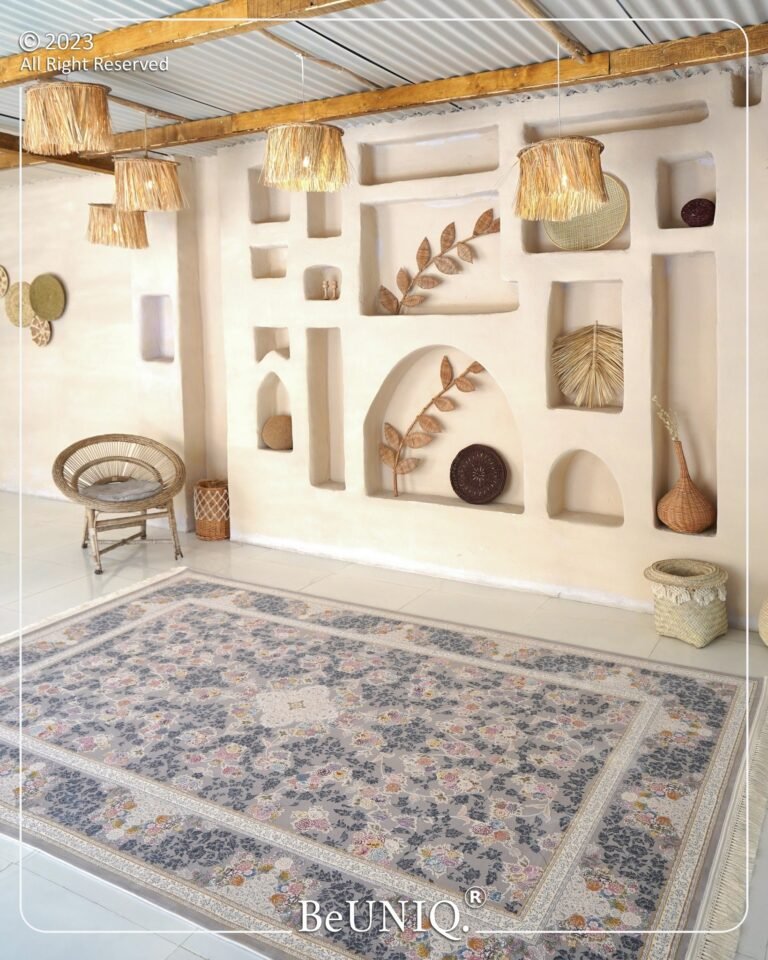
Flower Bouquet
In stock
Original price was: £370.00.£314.50Current price is: £314.50.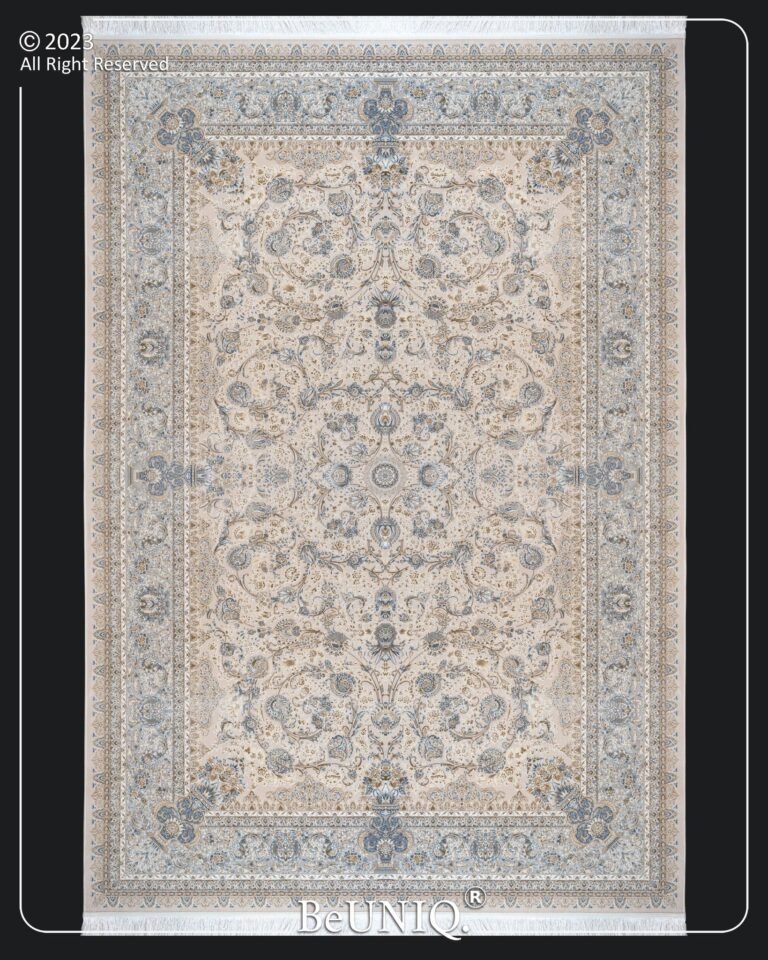
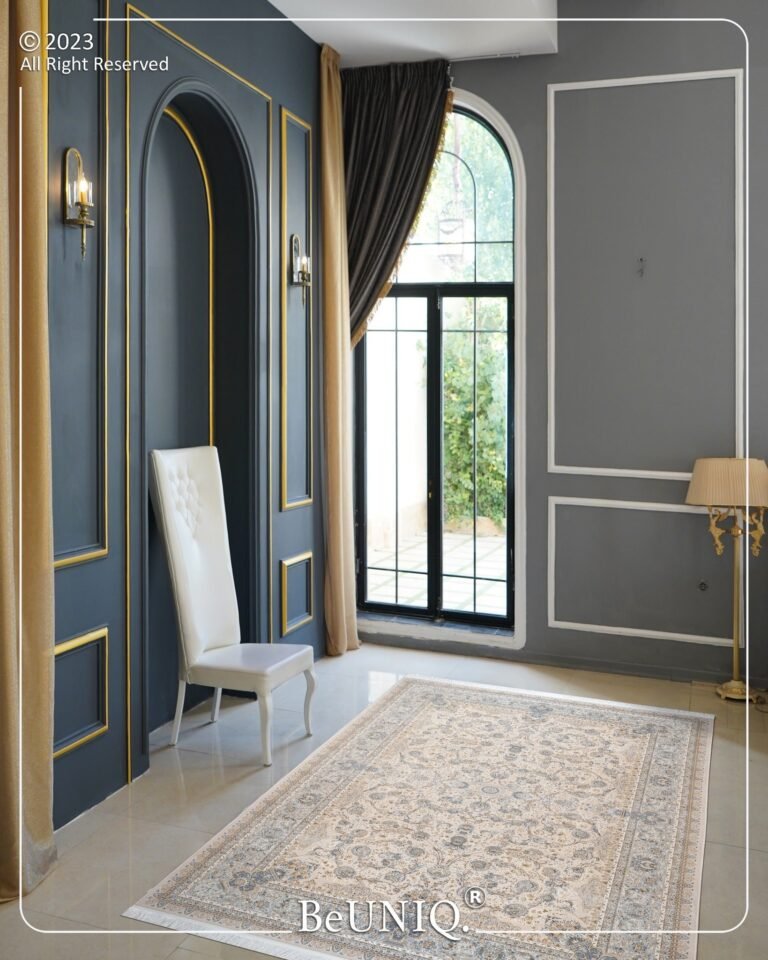
Exquisite
Out of stock
Original price was: £385.00.£327.25Current price is: £327.25.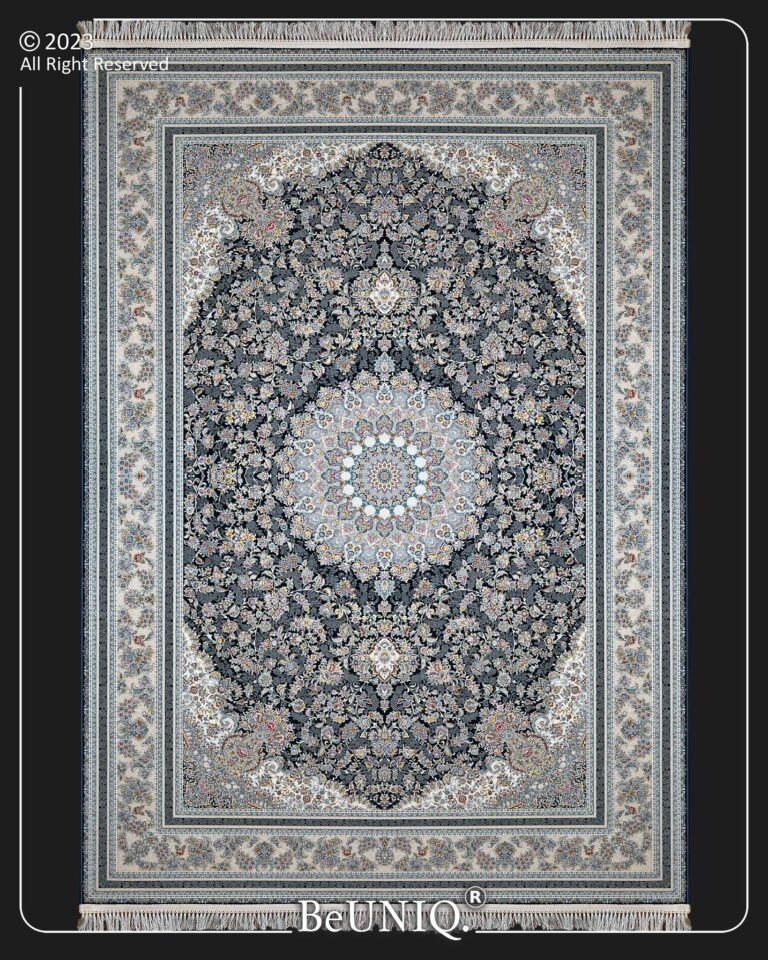
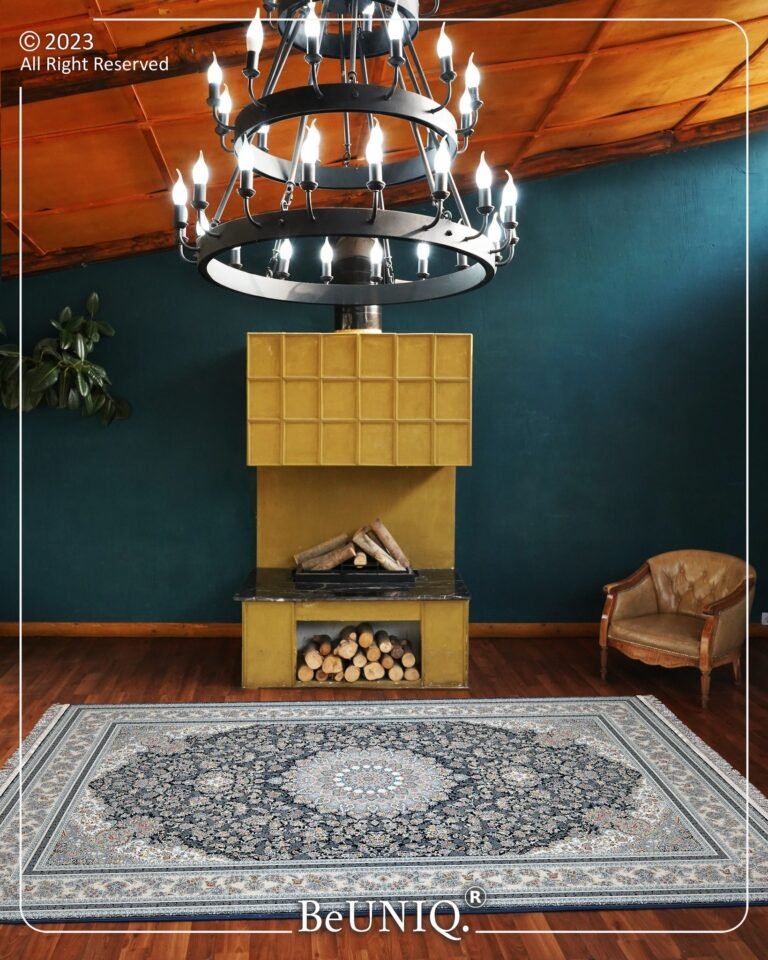
Dimora Navy
In stock
Original price was: £380.00.£323.00Current price is: £323.00.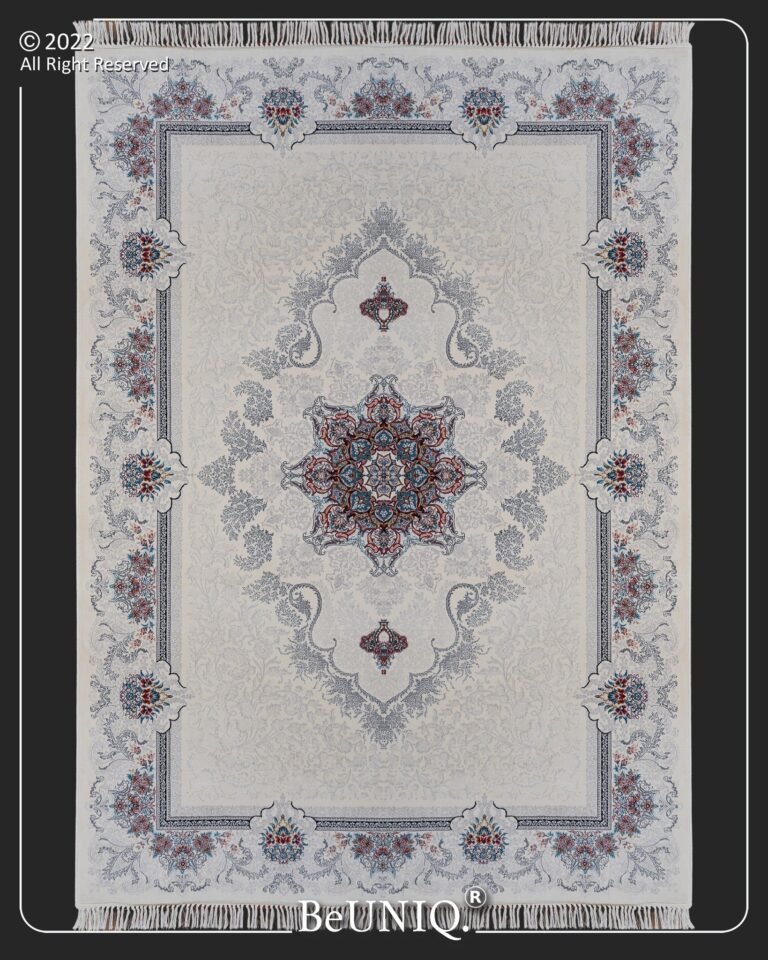
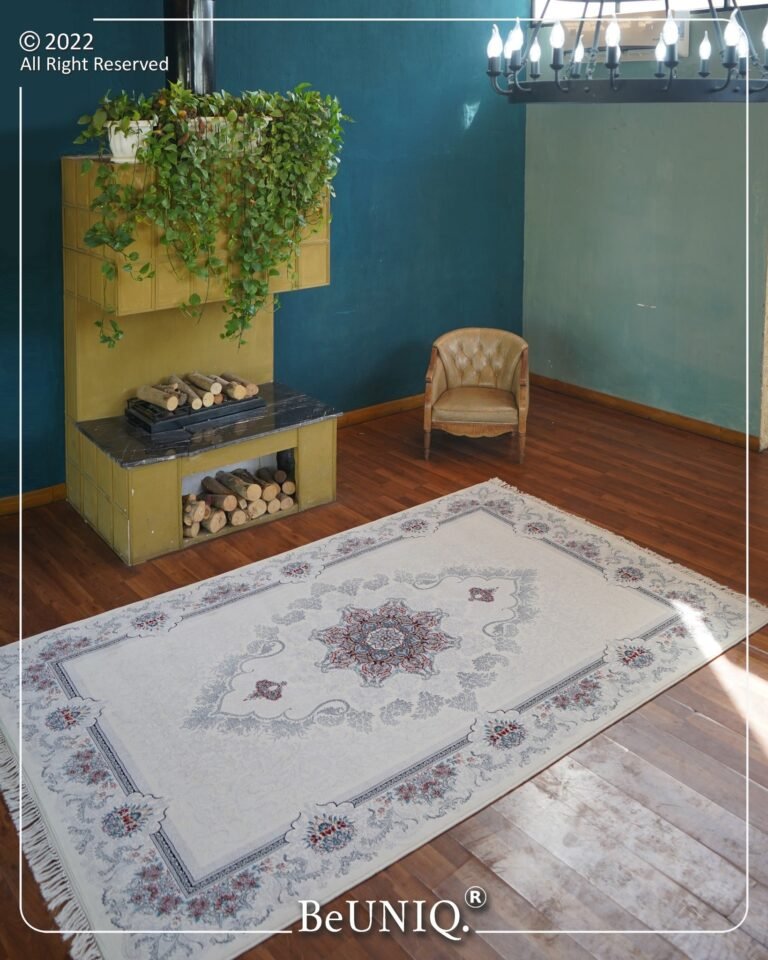
Convivial Cream
In stock
Original price was: £360.00.£288.00Current price is: £288.00.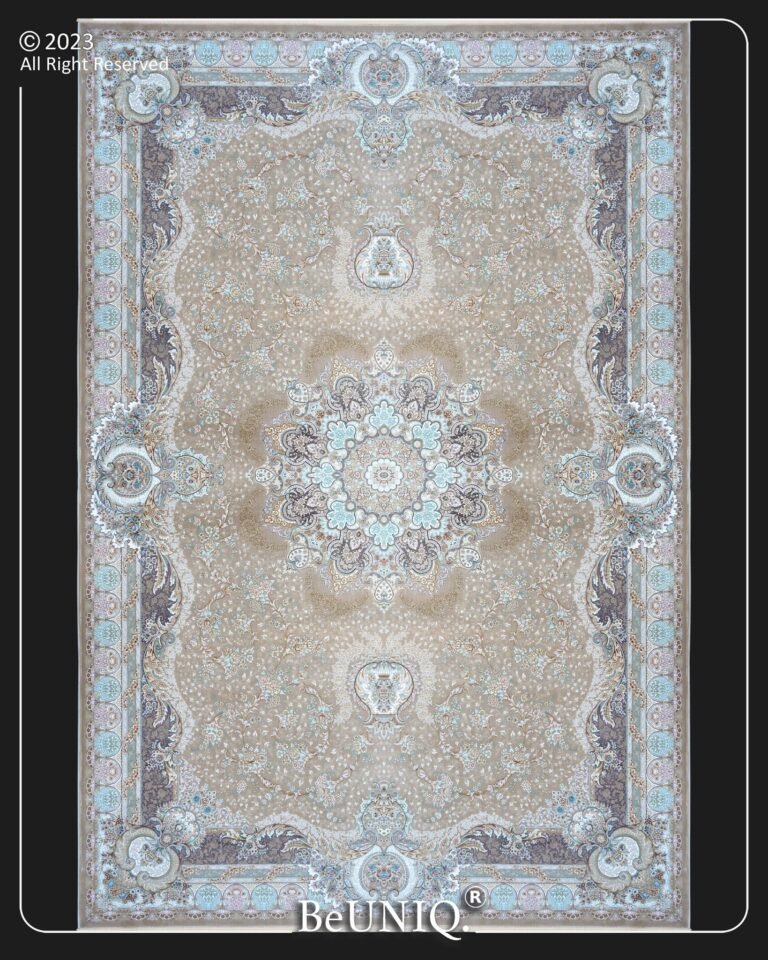
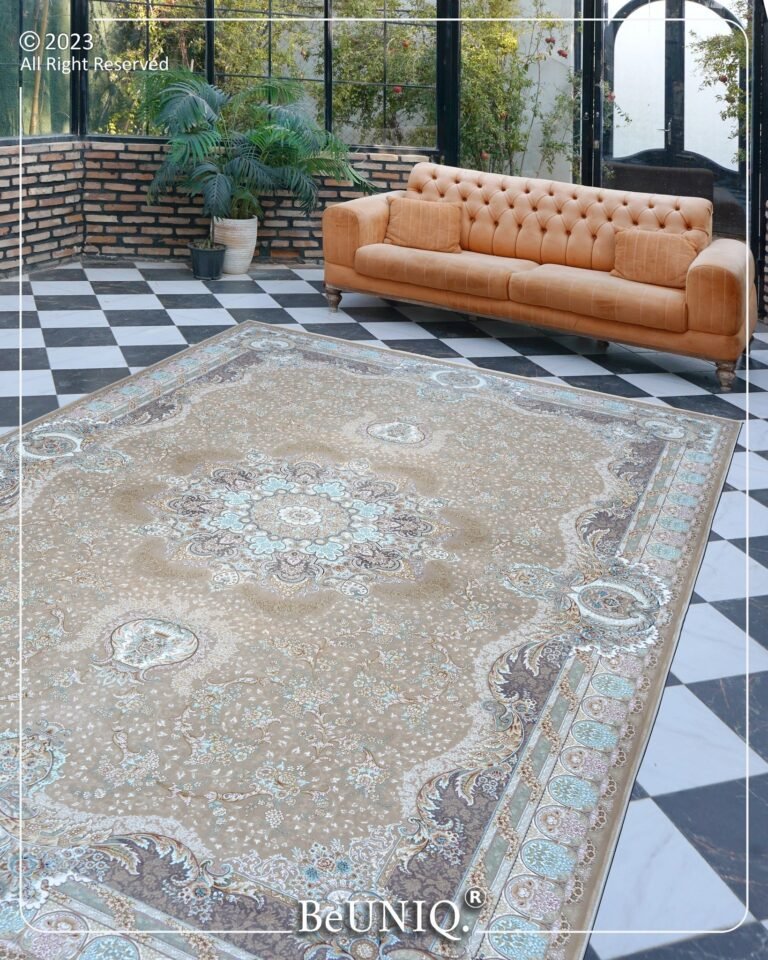
Aynoor
In stock
Original price was: £390.00.£331.50Current price is: £331.50.Classic Rugs (UK): Timeless Style That Works in Real Homes
There’s a reason classic rugs never go out of fashion. A well-chosen classic design instantly makes a room feel warmer, more “finished”, and more expensive — without you having to change the sofa, repaint the walls, or buy new furniture. If you’re shopping for classic rugs UK wide, you’re probably looking for something with heritage character: elegant borders, traditional motifs, subtle distressing, or that familiar “collected” look that makes a space feel lived-in (in a good way).
At beUNIQ, our Classic collection is curated for modern UK homes. Think classic patterns that sit beautifully under contemporary furniture, practical options for busy living rooms, and styles that hold their charm long after trend-led décor fades. Whether you’re here to buy classic rugs for a lounge refresh, a hallway upgrade, or a cosy bedroom setup, you’ll find classic designs that feel timeless — not dated.

Shop Classic Rugs Online With Confidence
Buying a rug online can feel tricky because you’re not just choosing a colour — you’re choosing a mood. The good news is classic rugs online are often the easiest category to shop for, because classic patterns are inherently forgiving: they hide everyday life better than flat minimal designs, they blend into mixed interiors, and they tend to look “right” even if you restyle your room later.
When you’re choosing a classic rug, you’re usually aiming for at least one of these outcomes:
-
Anchor the room (so furniture doesn’t feel like it’s floating)
-
Add warmth (especially in spaces with hard floors)
-
Bring character (without cluttering the décor)
-
Create balance (classic borders frame the layout beautifully)
That’s why classic designs are a smart investment: they’re not loud, but they’re never boring.
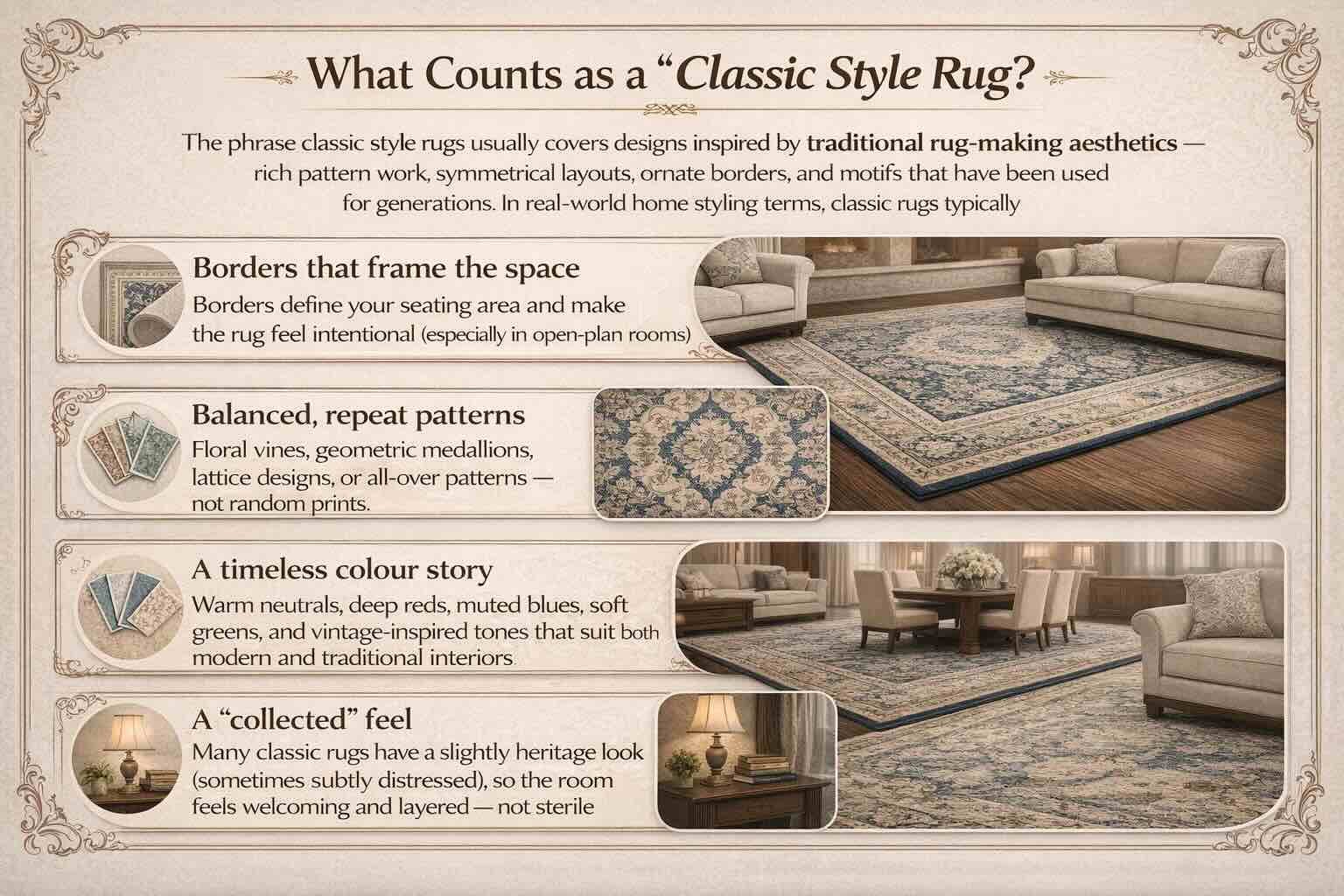
What Counts as a “Classic Style Rug”?
The phrase classic style rugs usually covers designs inspired by traditional rug-making aesthetics — rich pattern work, symmetrical layouts, ornate borders, and motifs that have been used for generations. In real-world home styling terms, classic rugs typically feature:
Borders that frame the space
Borders define your seating area and make the rug feel intentional (especially in open-plan rooms).
Balanced, repeat patterns
Floral vines, geometric medallions, lattice designs, or all-over patterns — not random prints.
A timeless colour story
Warm neutrals, deep reds, muted blues, soft greens, and vintage-inspired tones that suit both modern and traditional interiors.
A “collected” feel
Many classic rugs have a slightly heritage look (sometimes subtly distressed), so the room feels welcoming and layered — not sterile.
If you like interiors that feel calm, warm, and stylish without needing constant updates, classic is your lane.
Classic vs Traditional vs Vintage: Which One Do You Actually Want?
People often search for “classic rugs” when they really mean one of these neighbouring styles (all of which are important to include in your page content because the demand overlaps):
-
Traditional rugs: the most “true-to-classic” look — structured patterns, bold borders, timeless symmetry.
-
Vintage rugs: the worn-in, slightly faded, lived-in look (often softer contrast, more relaxed vibe).
-
Antique-inspired rugs: similar to vintage, but often richer pattern detail with an aged aesthetic.
-
Persian- / Oriental-inspired patterns: classic motifs that feel luxurious and detailed.
A simple way to choose:
-
If you want a rug that feels formal and elegant, go more traditional.
-
If you want a rug that feels relaxed and easy to style, go more vintage-inspired.
-
If you want maximum detail and richness, look toward Persian/Oriental-inspired patterns.
(And yes — these can overlap. A “classic” rug can be traditional and vintage-looking at the same time.)
Classic Rugs for Living Room: The Size Rules That Make It Look Expensive
If your main goal is a living room upgrade, classic patterns are a cheat code — but only if your size is right. The most common mistake is buying a rug that’s too small, especially in UK homes where we try to “save space” visually. In reality, a slightly larger rug makes the room feel more spacious and higher-end.
A simple rule that works in most lounges:
Your rug should be wide enough so that at least the front legs of the sofa sit on it. Even better if armchairs also touch the rug.
If you’re styling a lounge, it’s smart to also browse:
-
Living room rugs (for layouts and size ideas)
-
Large rugs (if you want that premium, anchored look)
-
Small rugs (for tighter spaces, reading corners, or layering)
Classic patterns suit living rooms particularly well because they hide crumbs, daily foot traffic, and the little signs of real life better than plain rugs.
Hallways, Runners, and High Traffic: Classic Rugs That Work Hard
Classic patterns shine in hallways and entrances. Why? Because you get instant style without needing wall art or extra décor — and the pattern naturally disguises high-traffic wear.
If you’re choosing a classic rug for a hallway, look for:
-
A more all-over pattern (more forgiving than a large empty centre)
-
A shape that fits your corridor (runner-style if you have a long hallway)
-
A pile height that won’t catch doors
Hallway shoppers often search for terms like hallway rugs and runner rugs because the format matters as much as the design. If you have a longer corridor, a runner-style classic rug can transform the space from “empty pass-through” to “designed”.
Bedrooms and Calm Spaces: Classic Doesn’t Have to Feel Heavy
A lot of people assume classic rugs are always bold and intense. Not true. In bedrooms, classic designs can be soft, calming, and beautifully subtle — especially if you choose a lighter base tone and lower-contrast patterning.
In bedrooms, classic rugs do three big things:
-
Add warmth underfoot (especially with hard flooring)
-
Make the room feel more “complete”
-
Bring texture without over-decorating
If your bedroom is neutral, a classic rug with gentle patterning adds depth without turning the room busy.
Choosing Colours: How Classic Rugs Blend With Modern Interiors
Classic doesn’t mean old-fashioned. In fact, classic patterns often look best when they’re paired with modern furniture — because the contrast feels intentional.
Here’s a practical way to choose colour:
If your room is mostly neutral…
Pick a classic rug with:
-
Warm beige / cream tones for softness
-
Grey / greige for a modern classic look
-
Muted blue accents for calm elegance
If your room needs energy…
Choose classic designs with:
-
Rich reds, rust, or terracotta hints
-
Deeper navy or charcoal accents
-
Stronger borders that “frame” the space
If you have pets or kids…
Patterns matter more than colour. A classic rug with layered detail is naturally better at hiding everyday marks than a flat, plain rug.
Pile Height and Practicality: What Actually Matters Day-to-Day
When buying classic rugs online, don’t just shop by photos — think about how you live.
Low to medium pile: best for busy homes
-
Easier to vacuum
-
Great for dining spaces and hallways
-
Often sits flatter under furniture and doors
Medium to plush pile: best for comfort
-
Cosier in living rooms and bedrooms
-
Adds warmth and softness
-
Feels more luxurious underfoot
One practical tip that matters more than people realise: use a rug underlay, especially on hard floors. It helps with comfort, reduces movement, and protects both your rug and your flooring. Many shoppers look specifically for a non slip rug underlay (or “anti slip rug underlay”) because slipping is one of the most common rug frustrations in UK homes — and underlay is usually the cleanest fix.
Affordable Classic Rugs: How to Shop Smart Without Buying “Cheap Looking”
You can absolutely find affordable classic rugs — but affordability should never mean “thin, flat, and lifeless.” The goal is value: a rug that makes your room look better than the price you paid.
Here’s how to buy smart:
1) Prioritise size where it counts
In living rooms, a rug that’s slightly too small often looks cheaper than a larger, well-proportioned rug — even if the larger option costs more upfront. If you want the biggest visual impact, invest in the right size first.
2) Choose pattern density for practicality
Classic patterns with more detail tend to look richer and hide wear better. That means you don’t have to replace the rug quickly, which is real value.
3) Pick a versatile colour family
If your rug works with multiple cushion colours, wall tones, and seasonal styling, you’ll keep it longer — again, better value.
4) Know what drives price
Prices typically vary based on:
-
Rug size
-
Construction and finish quality
-
Pattern complexity and colour layering
-
The feel and density of the pile
So when you compare classic rugs, don’t compare only by image — compare by how the rug will perform in your room over time.
How to Care for Classic Rugs (So They Stay Beautiful)
Classic rugs tend to be forgiving, but the basics make a huge difference:
-
Vacuum regularly, especially in high-traffic paths (hallway centres, sofa edges)
-
Rotate the rug occasionally so one area doesn’t wear faster than the rest
-
Blot spills immediately (don’t rub — rubbing pushes liquid deeper into fibres)
-
Consider a good underlay to reduce slipping and friction, especially if you’ve searched things like “how to stop rugs moving on carpet” — movement usually comes from either the wrong backing for the floor type or a missing underlay.
If you want a longer, “newer for longer” look, treating your rug like a foundation layer (not a disposable accessory) is the mindset shift that pays off.
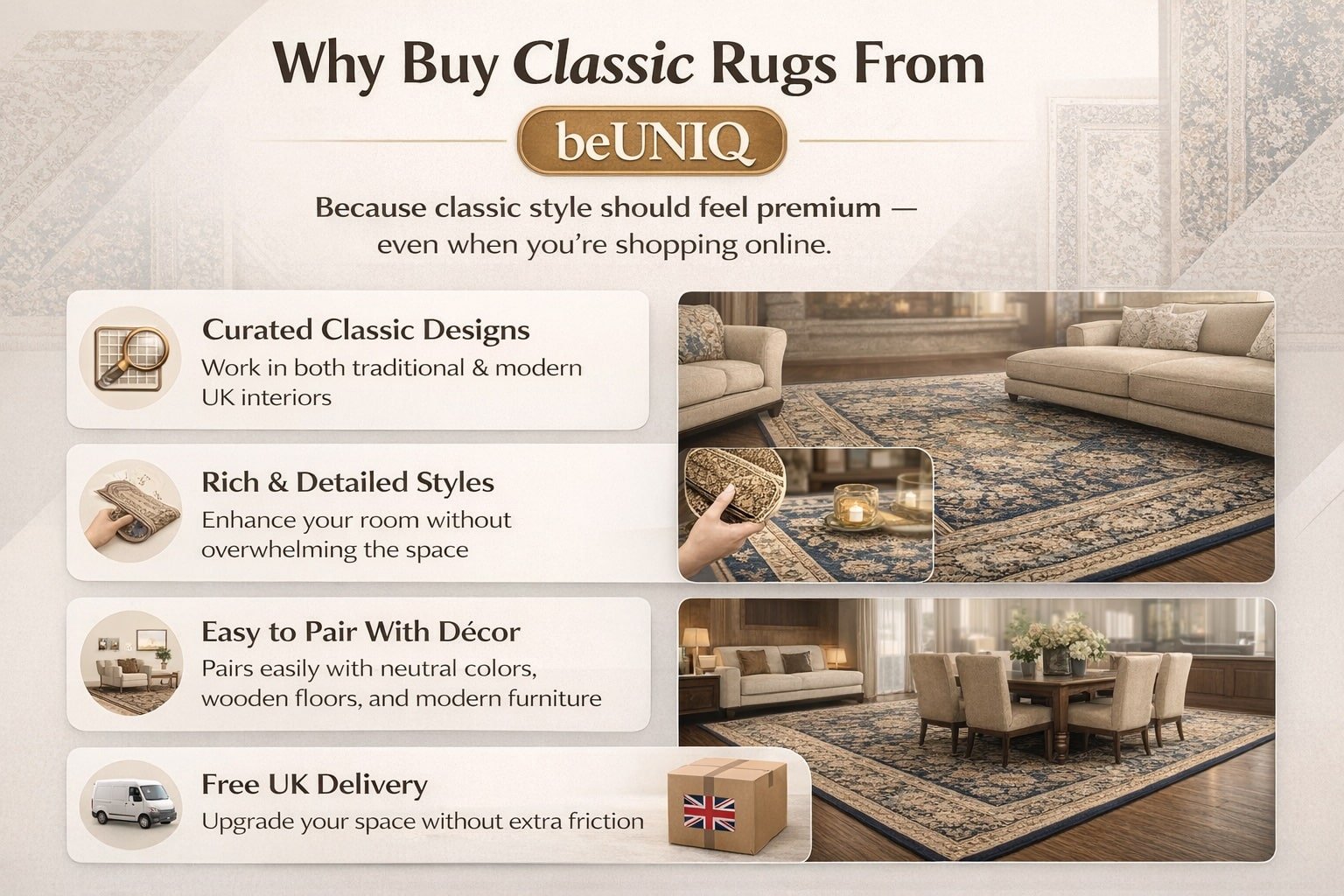
Why Buy Classic Rugs From beUNIQ?
Because classic style should feel premium — even when you’re shopping online.
-
Curated classic designs that work in both traditional and modern UK interiors
-
Styles that look rich and detailed without overwhelming the room
-
A collection that pairs easily with neutral décor, wooden floors, and modern furniture
-
Free UK delivery so you can upgrade your space without extra friction
Browse the Classic collection below, and if you’re styling a full room, it’s also worth exploring related pages like Traditional Rugs, Persian Rugs, Living Room Rugs, and Hallway Rugs — classic patterns connect beautifully across these spaces.
1) What’s the difference between classic rugs and traditional rugs?
In everyday shopping language, the terms overlap a lot — and that’s why people often search both. Classic rugs is a broader label that can include traditional, vintage-inspired, and heritage-pattern designs that feel timeless. Traditional rugs usually points to the more structured, formal end of classic styling: strong borders, symmetrical layouts, and classic motifs that look like they’ve been used for generations.
If you want a rug that feels elegant and “proper,” traditional is the safer direction. If you want the timeless look but prefer a softer, more flexible vibe (especially in modern interiors), classic is the more open category.
2) What size classic rug should I choose for a living room?
For living rooms, size is the biggest difference between “nice” and “wow.” As a rule, choose a rug that allows at least the front legs of your sofa to sit on the rug. This anchors the seating area and makes the room feel designed rather than pieced together.
If you have space, going larger often makes the whole room feel bigger. If you’re uncertain, measure your seating zone (sofa length + the area you want under the coffee table) and aim for a rug that frames that zone rather than floating in the middle.
3) Can classic rugs work with modern furniture?
Yes — and in many homes, that pairing looks best. Modern sofas and clean-lined furniture can sometimes feel flat without texture or pattern. A classic rug adds depth, warmth, and character, and it stops the room from feeling like a showroom. The trick is choosing a classic rug whose colours relate to your palette (warm neutrals, muted blues, soft greys) so the pattern feels intentional, not random.
4) How do I stop a rug from slipping or moving?
Most rug movement issues come down to floor type and friction. The simplest fix is a rug underlay, especially a non slip rug underlay (also often searched as “anti slip rug underlay”). Underlay helps in three ways: it reduces slipping, improves comfort underfoot, and protects the rug backing and the floor.
If your rug is on carpet and still moves, you may need a grippier underlay designed for carpet-on-carpet contact. And if you’re constantly re-straightening your rug, underlay is usually cheaper and cleaner than trying quick DIY solutions.
5) How do I clean and maintain a classic rug at home?
For regular maintenance, vacuum consistently and rotate your rug occasionally so foot traffic wears evenly. For spills, blot immediately and avoid rubbing. Classic patterns are generally forgiving, but fast action matters.
For deeper cleaning, follow the rug’s care guidance (it can vary by material and construction). If you’re shopping for classic rugs online, it’s smart to choose a design that’s practical for your household — classic patterns with layered detail tend to hide small marks better, which means the rug looks fresh for longer.